Belief Genome Project · 124 dimensions
The Hidden Code That Shapes Every Decision You Make.
In most surveys and polls, somewhere between 10 and 20 percent of people answer "neither agree nor disagree" and are classified as undecided. But when it comes time to vote, buy, or commit, nobody gets to stay neutral. The Belief Genome Project is a new entropy research framework that maps the signal of a person's beliefs across 124 dimensions so we can forecast which way they'll lean when the choice becomes yes or no.
See Your Belief Genome Come Alive
See your Belief Genome across 124 dimensions in two strands. Each column is one dimension. Its color shows amplitude, or where your response sits on the belief scale. Its letter shows coherence, or how consistent the responses are. Hover over a column to see its name, score, and the underlying question.
See Your Beliefs in a Variety of
Stunning Visualizations.
Visualize your belief genome · Try them with your own serial key
BGP Register
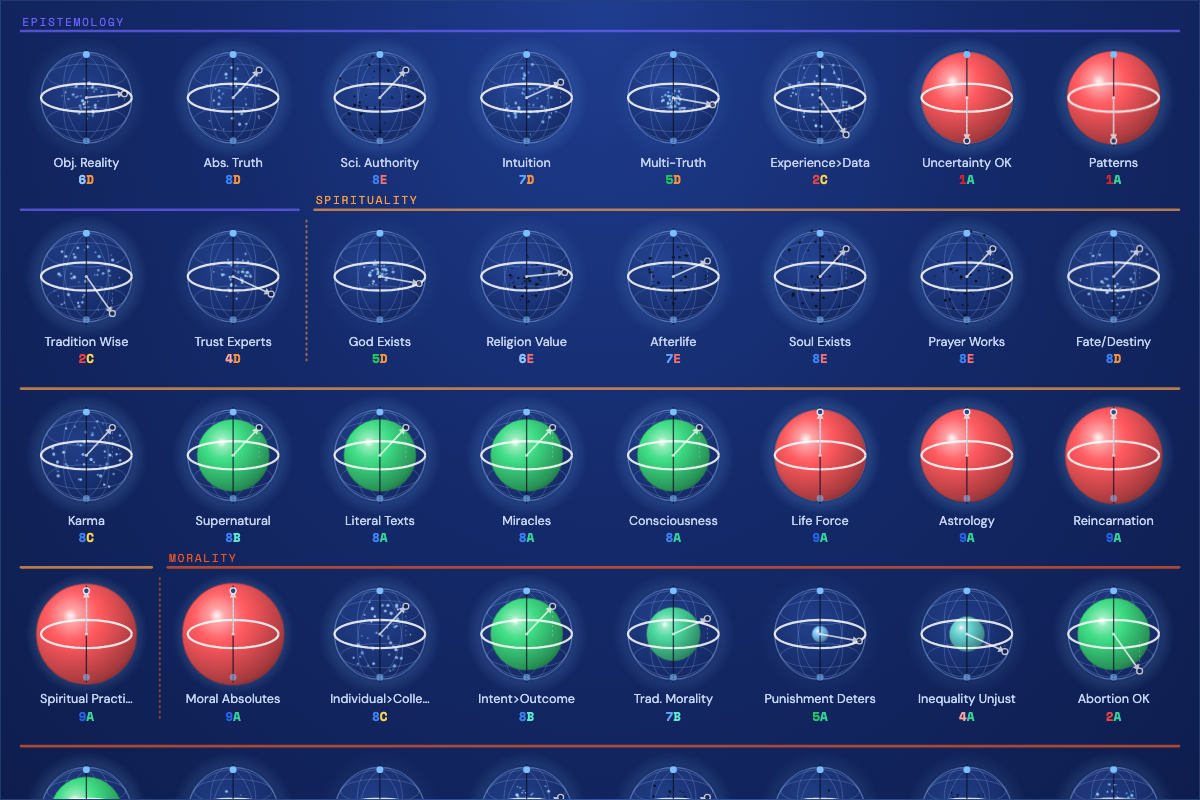
124 live cognitive qubits, each representing a belief at a glance.
BGP Life Balance
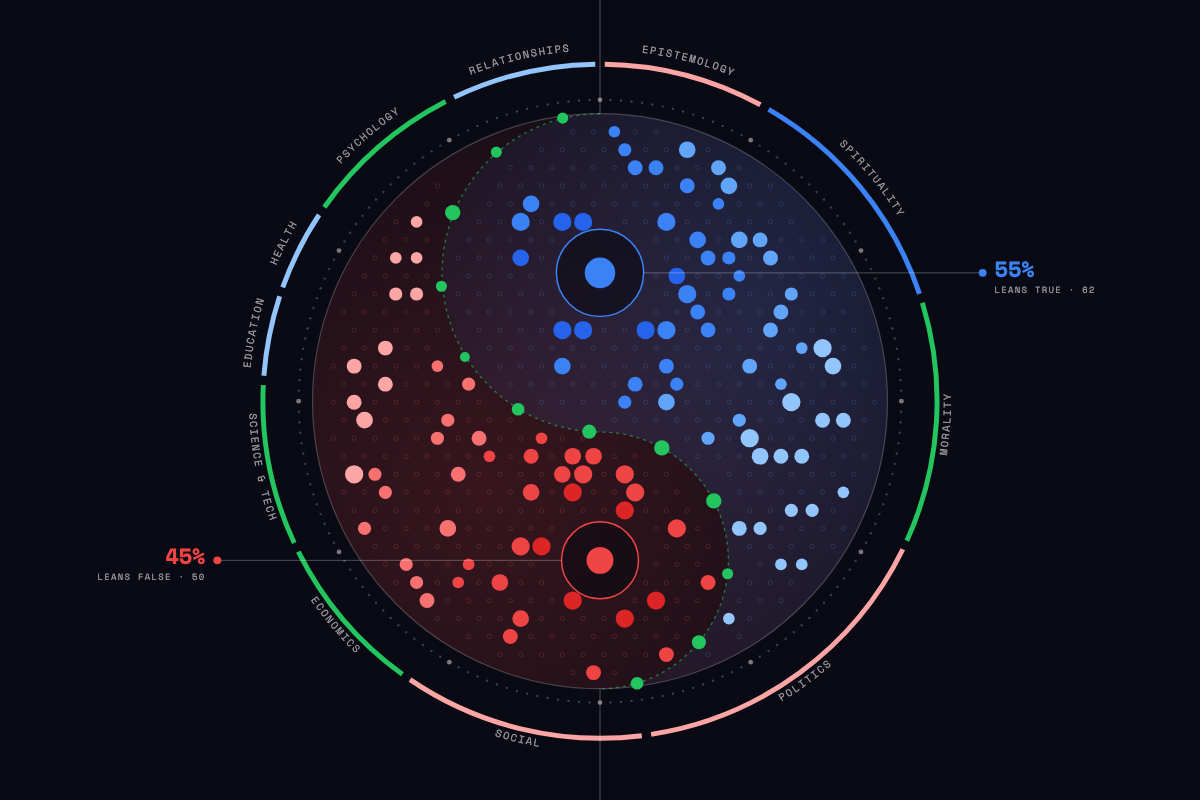
Your true and false leanings as yin and yang, sized to your real split.
BGP Colorwheel
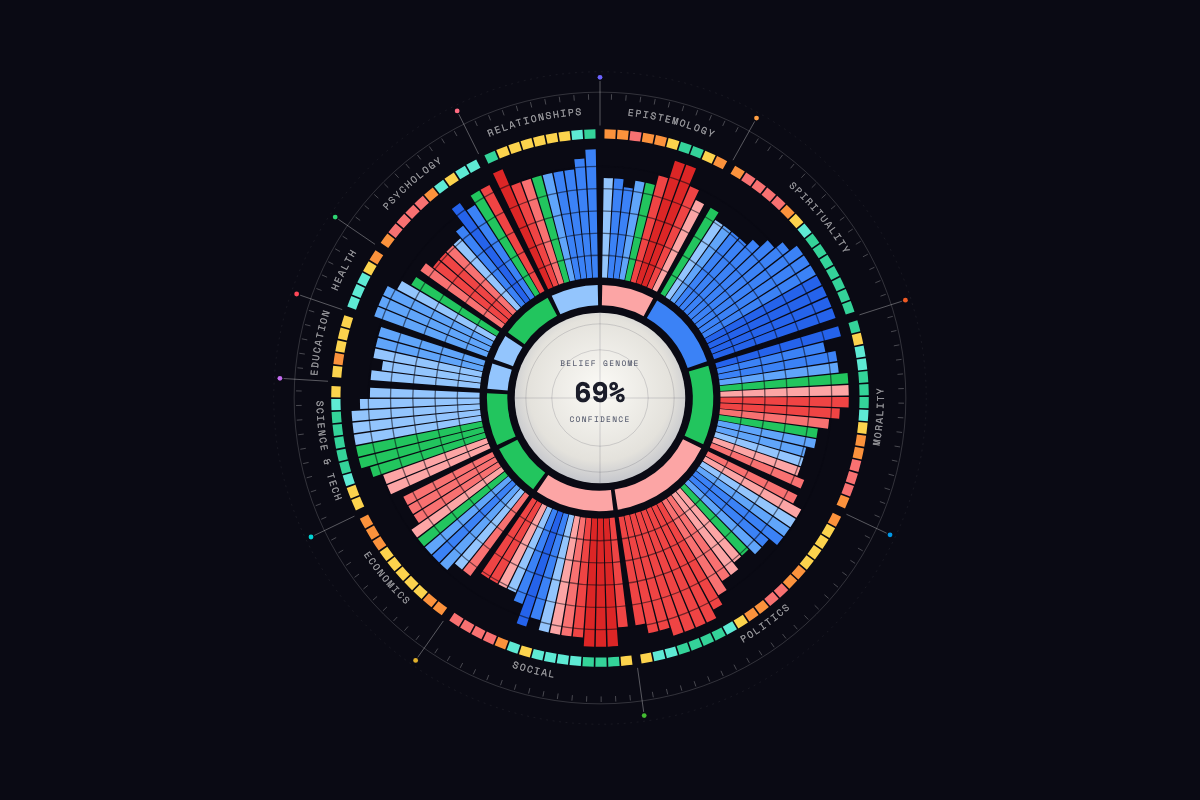
The belief DNA wrapped into a circle across 11 categories.
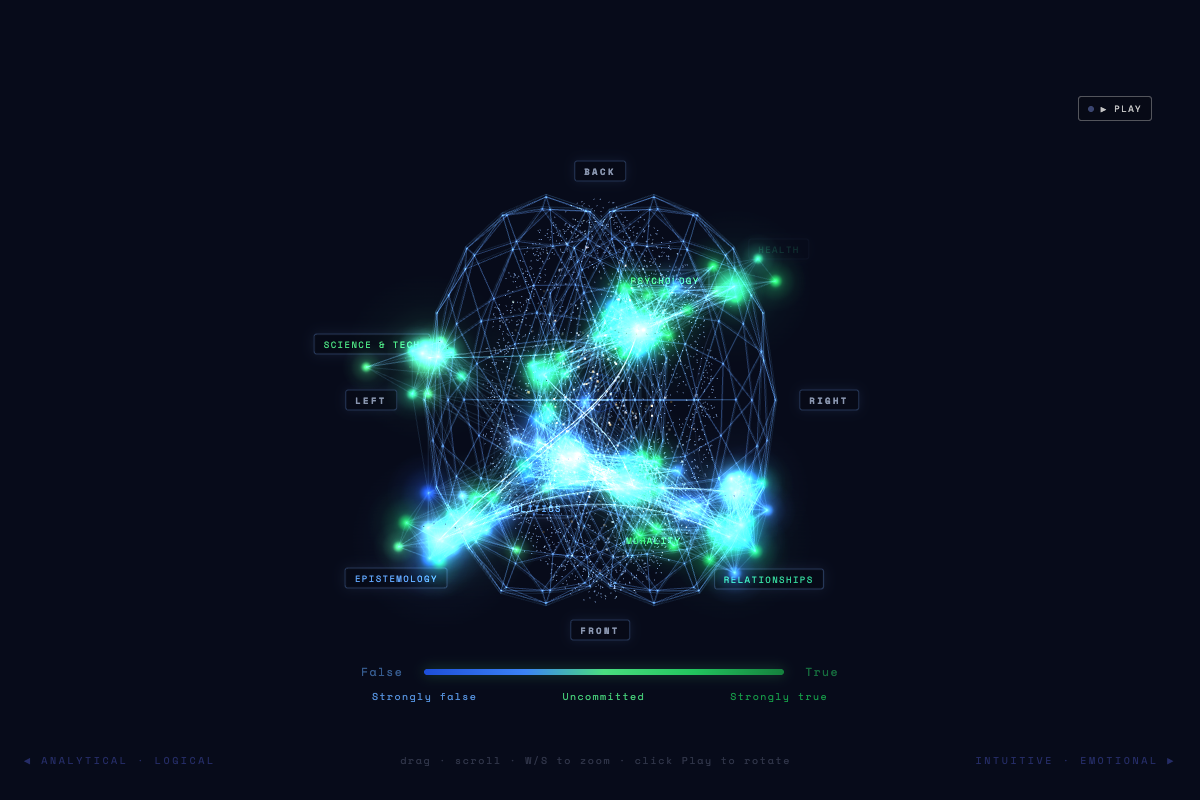
BGP Neural Map
Every belief placed in the brain, linked to related ideas.
What is a Belief in Superposition?
A belief is not always a fixed point. Many times, people have multiple positions on a single topic. These can be multiple truths that are equally valid. Adjust the probe sliders below and watch as the wave map redistributes the lean, phase, and coherence. Mapping multiple beliefs predicts where your answer will fall once forced to make a final single decision.
Three dials, one Cognitive Qubit: Position is where on the belief dimension a probe points. Phase (0°–360°) represents context in this model. Two probes under inverted framings (e.g. "I support X" vs. "I oppose X") sit a half-cycle apart (180°) and cancel where they overlap in position. Try "True cancellation" below to see it clearly. Coherence controls sharpness: 1.0 = narrow spike, near 0 = broad diffuse envelope. Click any dot on the wave to open that probe's Cognitive Qubit readout.
Position
Each probe adds a small wave to one belief dimension. Move it from 1 to 9. The midpoint, 5, means uncommitted.
Framing
Phase stands for how a question is worded. Two probes at the same place but half a turn apart can cancel each other out.
Prediction
The shaded area is the model's probability. Predict outcome shows where the belief would most likely settle if it had to settle now.
From Measurement to Application
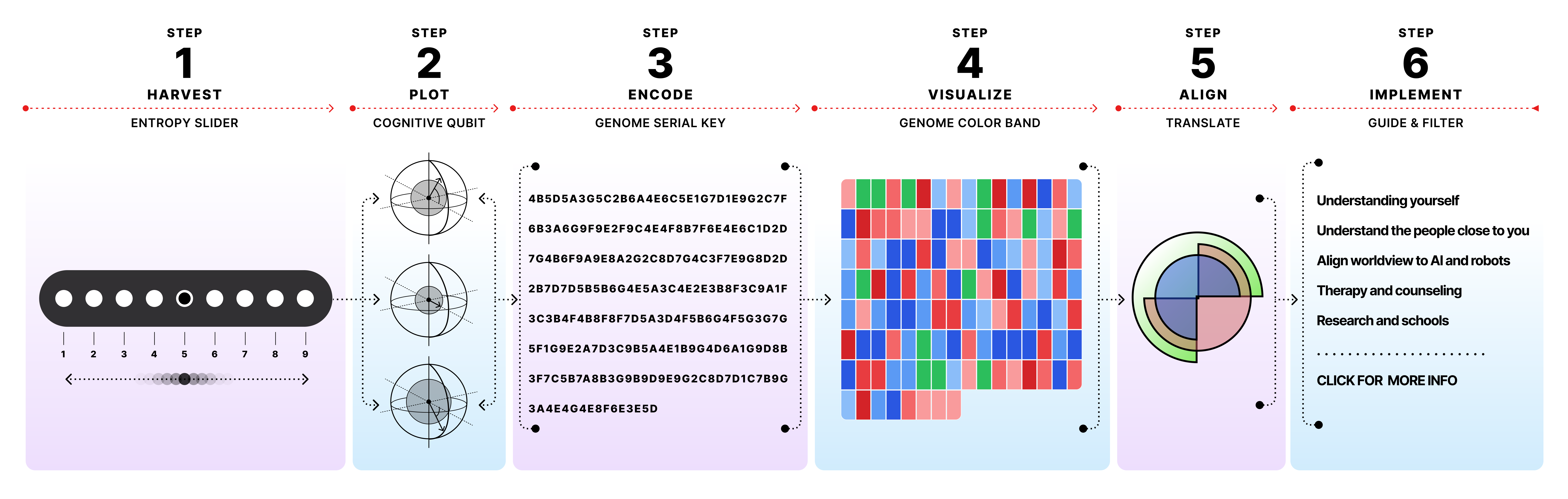
Six steps take a belief from a single response to something a system can respect.